Buying Guides
Plywood Factory Turnkey Planning & Line Design | Jinzuo Machinery
Learn why turnkey plywood plant design requires deep technical expertise. Discover how process alignment, machinery selection, and capacity matching protect your investment.
Why Turnkey Planning for Plywood Plants Demands High Technical Expertise
Executive Summary: Plywood production is inherently dynamic, relying on natural wood variable properties and complex machinery interdependencies. A turnkey plant project is not merely a collection of standalone equipment; it is a synchronized engineering system. This article explores why technical depth, process alignment, and operational foresight are critical to protecting your multi-million dollar investment.
Introduction: The Invisible Challenge in Plywood Manufacturing
In the global wood-based panel industry, plywood manufacturing technologies have reached a high level of maturity. Yet, unlike particleboard or MDF production—which are heavily automated with uniform raw materials—plywood production remains uniquely complex. It deals with natural veneers, changing moisture levels, and multi-stage manual interactions.
For furniture manufacturers and panel investors, assessing finished panel quality is relatively straightforward. The true challenge lies in selecting a reliable equipment partner and engineering solution provider.
In an industry where human decisions and mechanical configurations intersect at every step, technical expertise and turnkey vision remain the ultimate variables determining profitability.
1. Panel Quality Is Rooted in Material Behavior and Dynamic Processing
A plywood sheet is only as good as its raw materials and the dynamic control of its production process.
- Raw Material Variables: Veneer quality fluctuates based on wood species, origin, tree age, conditioning duration, thickness tolerances, and initial moisture content. Each mechanical phase—from peeling and splicing to pre-pressing—directly influences veneer integrity.
- Adhesive Dynamics: Glue type selection and precise glue-spread distribution dictate structural bonding, water resistance, and formaldehdye emission standards.
- Process Adaptability: Different processing stages require distinct machine parameters. Operators must continuously calibrate pressure, temperature, and cycle times (such as hot press closing speeds) to match real-time veneer conditions.
2. Machinery Complexity Exceeds Finished Product Specs Exponentially
Evaluating individual machines requires an engineering perspective far beyond inspecting a finished sheet of plywood.
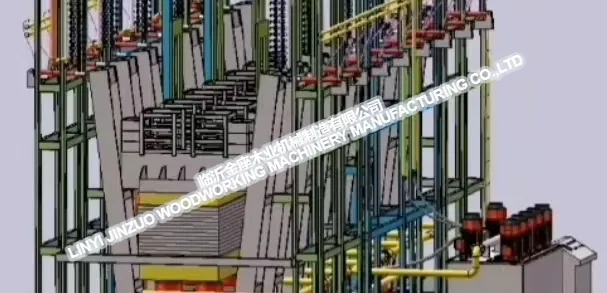
Every core unit—from high-tonnage multi-daylight hot presses to automatic veneer seamers—is governed by precise mechanical, hydraulic, and thermal design logic:
- Engineering Specifications: Component metallurgy, structural frame thickness, hydraulic valve response times, and thermal distribution plates directly determine operational precision.
- Structural Durability: Welding consumables, stress-relief treatments, and fabrication standards dictate whether a press maintains strict parallelism over a decade or warps under thermal stress within months.
The Cost vs. Value Dilemma: Understanding Price Discrepancies
Investors often ask: "Why do functionally similar machines have price differences of tens or hundreds of thousands of dollars?"
Unscrupulous suppliers may use refurbished hydraulic components, lower-grade steel, or non-certified electrical fittings under fresh paint. To an untrained buyer, two machines look identical on paper. In practice, hidden compromises lead to frequent downtime, inconsistent heat transfer, high rejection rates, and premature equipment failure.
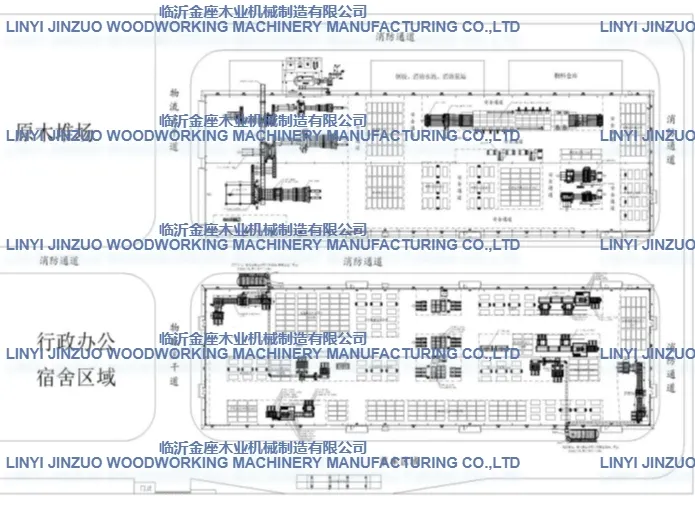
3. Turnkey Plant Layout: Engineering a Synchronized System, Not Stacking Machinery
A modern plywood factory involves a major capital investment, ranging from hundreds of thousands to tens of millions of dollars. Decisions regarding line layout, labor allocation, floor area, and target output directly dictate your Return on Investment (ROI).
- Process Flow Customization: Production lines for film-faced shuttering boards, commercial plywood, or furniture-grade core veneers demand entirely different machinery combinations and press cycles.
- Eliminating Bottlenecks: Unbalanced output capacities between stations create severe operational bottlenecks. Professional turnkey layout designs optimize material flow and logistics pathways, eliminating redundant handling and maximizing floor space utilization.
- Tailored Solutions Over Templates: Standardized CAD templates fail to account for regional timber characteristics, climate variances, energy availability, or specific customer specs. Value lies in customized engineering adaptations.
4. What True Expertise Delivers in Turnkey Project Execution
Partnering with a specialized turnkey planning team provides value far beyond glossy brochures or rendered 3D models. True expertise delivers measurable risk mitigation:
- Deep Mechanical Audit: Evaluating machinery based on structural physics, hydraulic logic, and steel specs rather than sales talk.
- Precision Capacity Alignment: Balancing every stage from veneer drying to hot pressing to avoid over-budgeting or idle machinery capacity.
- Frictionless Operations: Preventing capacity mismatches upfront, saving factory managers from chaotic troubleshooting and internal friction.
- Strict Equipment Acceptance (FAT): Verifying engineering drawings, checking electrical/hydraulic components, and enforcing quality control prior to shipment.
- Commissioning & Production Onboarding: Providing experienced plant directors and technical leads to build operating teams, allowing new plants to achieve full capacity rapidly at minimal cost.
Conclusion: Protecting Your Critical Investment
Building a plywood manufacturing facility is one of the most critical investments a company can undertake. Buying individual machines is simple; engineering a high-efficiency, synchronized, and highly profitable manufacturing facility requires deep domain knowledge.
Your major investment deserves dedicated engineering rigor and experienced protection.
whatsapp: Doris +86 19033692318
Email: jinzuo.lee@gmail.com